Exterior painting in Michigan is not just a matter of choosing a color and finding an open week on the calendar. Weather plays a major role in how coatings apply, cure, and perform over time.
For commercial buildings, the stakes are even higher. Exterior walls, masonry, metal panels, doors, railings, trim, and other surfaces are constantly exposed to rain, snow, humidity, UV exposure, and dramatic seasonal temperature changes. Applying coatings under poor conditions can lead to slow curing, weak adhesion, blistering, or premature failure.
So, when is the best time to paint exterior surfaces in Michigan?
In most cases, late spring through early fall (spanning roughly late May through September/October) provides the most reliable conditions. But the calendar alone does not determine whether a project should move forward. Temperature, surface moisture, humidity, wind, rain, and the specific coating system all matter.
Here is what West Michigan business owners and facility managers should consider when planning exterior painting.
Why Michigan Weather Matters for Exterior Painting
Exterior coatings need suitable environmental conditions to bond and cure correctly. Michigan weather can change quickly, especially during spring and fall. A warm afternoon may be followed by a cold night, while periods of high humidity or unexpected rain can interrupt a project that looked perfectly timed just a day earlier.
Commercial buildings also tend to have a wide variety of exterior materials. Concrete block, masonry, stucco, steel, metal panels, wood trim, doors, railings, and previously painted surfaces all respond differently to temperature and moisture. A professional commercial painter therefore looks beyond the forecasted daytime high.
Important conditions include:
- Air temperature
- Surface temperature
- Overnight temperature
- Relative humidity
- Rain probability
- Wind conditions
- Dew and condensation
- Direct sunlight
- Manufacturer requirements for the coating being used
The best painting window is one where the surface remains within the coating manufacturer’s recommended conditions long enough for proper application and curing.
Late Spring: A Strong Time to Begin Exterior Painting
Late spring is often one of the best periods for commercial exterior painting in Michigan. By this point, winter temperatures have generally eased and surfaces have had time to recover from snow, ice, and prolonged freezing conditions. Days are getting longer, giving crews more workable daylight, while temperatures are typically more moderate than during the hottest part of summer.
Late spring also provides an opportunity to inspect buildings for damage caused by winter.
That may include:
- Peeling or cracked coatings
- Salt residue
- Moisture staining
- Failed caulk
- Surface rust
- Freeze-thaw damage
- Cracked masonry
- Loose or deteriorated paint
Finding these issues early allows repairs and preparation to happen before new coatings are installed.
The main challenge during spring is moisture. Frequent rain, damp masonry, and cooler overnight temperatures can delay work, which is why the surface itself needs to be evaluated rather than simply relying on the season.
Summer Offers Long, Productive Painting Windows
Summer is another excellent time for exterior commercial painting. Long daylight hours allow crews to complete larger sections efficiently, and warmer temperatures generally support predictable curing. Summer can be especially useful for large buildings, warehouses, industrial facilities, schools, and commercial properties where exterior work needs to be completed in phases.
However, hotter weather is not automatically better.
Very high temperatures can create their own problems. Surfaces exposed to direct sunlight may become significantly hotter than the surrounding air. Paint applied to an overheated wall or metal panel may dry too quickly, affecting application and appearance.
Professional painters may adjust the schedule accordingly by:
- Starting earlier in the morning
- Working on shaded elevations first
- Following the sun around the building
- Avoiding extremely hot surfaces
- Selecting products suitable for expected temperatures
Summer humidity and thunderstorms also need to be monitored carefully.
The advantage is flexibility. Longer days and more consistent temperatures often provide enough workable windows to keep commercial projects moving efficiently.
Early Fall Can Be Excellent for Exterior Painting
Early fall is sometimes overlooked, but it can provide some of the best exterior painting conditions of the year. Temperatures are often comfortable, intense summer heat has passed, and humidity may be lower. These conditions can make application easier for both crews and coatings.
For businesses, fall painting can also be strategically useful. A project completed before winter helps ensure exterior surfaces are protected before snow, ice, road salt, and freeze-thaw conditions return.
The challenge is that the workable window becomes shorter as the season progresses.
Cool nights become increasingly important. Even when afternoons are warm enough to paint, a rapid temperature drop after sunset can interfere with curing. Morning dew may also keep surfaces wet longer.
For this reason, early fall is generally more predictable than late fall.
What About Painting in Winter?
Michigan winter is usually the most difficult season for exterior painting. Cold temperatures slow curing, surfaces may be frozen or damp, and snow or ice can make preparation difficult. Exterior walls and metal surfaces can also remain far colder than the surrounding air.
That does not mean every exterior coating project is impossible during colder weather.
Modern coating technology includes certain products designed for lower-temperature application. Sheltered areas or specialized industrial projects may also allow environmental conditions to be controlled. However, winter exterior painting usually requires more careful planning and fewer assumptions.
For most general commercial exterior painting projects, waiting for a reliable weather window is the safer choice.
Temperature Matters More Than the Month
One of the biggest mistakes when determining the best time to paint exterior surfaces is focusing only on the season.
The product specification matters more.
Different paints and coatings have different minimum and maximum application temperatures. Some modern commercial coatings can be applied at relatively cool temperatures, while others need warmer conditions to cure correctly.
The surface temperature is particularly important.
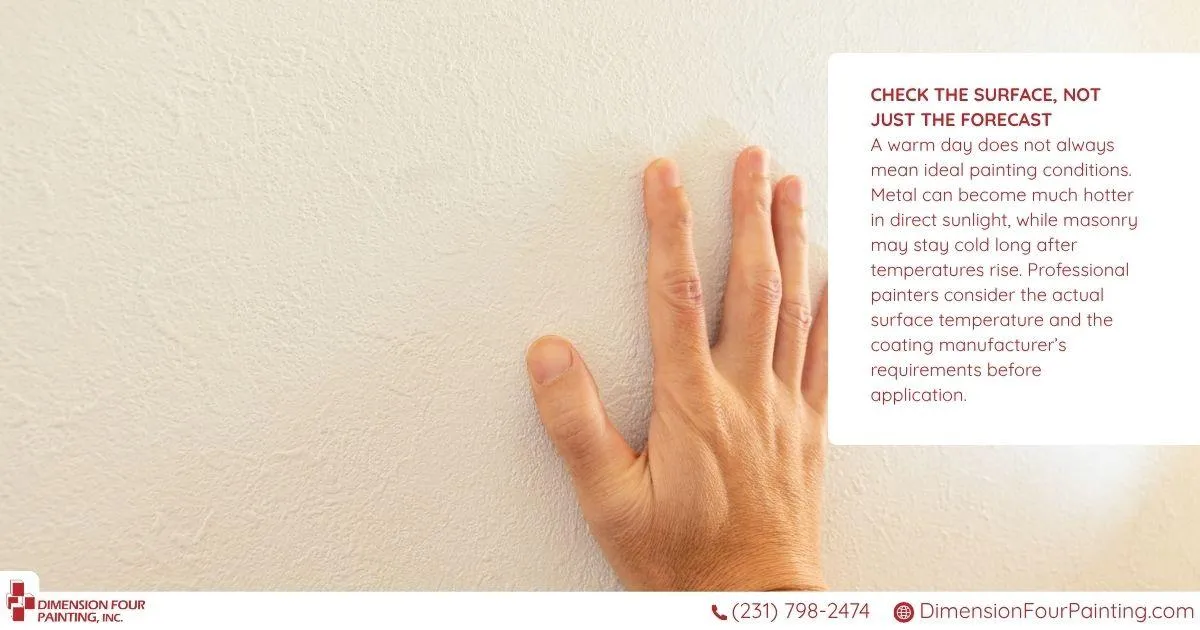
A metal wall exposed to direct sunlight may be much hotter than the surrounding air. Conversely, masonry that remained cold overnight may still be too cool even after the daytime air temperature rises.
This is why professional crews monitor both the weather and the substrate.
The goal is not simply to paint when it feels comfortable outside. It is to keep the coating within its required application and curing range.
Humidity Can Affect Exterior Paint Performance
High humidity slows the evaporation of water from many coatings and can extend drying times. It can also increase the likelihood of condensation forming on cooler surfaces.
This becomes especially important during early mornings and evenings. A surface may look dry but still carry a thin layer of moisture that affects adhesion. Painting over damp masonry or metal can trap moisture beneath the coating and contribute to future blistering or peeling.
Michigan’s humid summer periods and damp spring mornings make moisture awareness essential. Professional painters typically wait until conditions are appropriate rather than forcing the schedule simply because rain is not currently falling.
Rain Requires More Than a Clear Hour
A break in the rain does not necessarily mean a surface is ready to paint. Commercial buildings often contain porous materials such as concrete, masonry, and block that can retain moisture after rainfall. Those surfaces may require additional drying time before primer or paint can be safely applied.
The forecast after application matters as well.
A coating needs enough time to become resistant to moisture before rain arrives. The exact window varies by product, temperature, humidity, and substrate.
A commercial painting contractor will therefore look at the entire working window:
- When the last rain occurred
- Whether the surface is dry enough
- How long the coating needs before exposure
- Whether rain is expected later
- How nighttime conditions may affect curing
This approach helps avoid applying paint during a narrow gap that is technically dry but unsuitable for long-term performance.
Morning Dew Can Delay the Start of Painting
Dew is an easy condition to overlook. In spring and fall, cool overnight temperatures can cause moisture to collect on exterior surfaces. Metal panels, railings, roofs, doors, and other materials may remain damp well into the morning.
Painting over condensation can interfere with adhesion.
The correct start time therefore changes from day to day. A crew may arrive early to prepare the site but wait until the surface itself has dried sufficiently before applying coatings.
This is another reason exterior commercial painting should be planned around actual site conditions rather than a rigid clock.
Wind Also Affects Exterior Painting
Wind matters for more than crew comfort. Strong winds can carry dust, dirt, leaves, and debris onto freshly painted surfaces. They can also complicate spray application and increase the risk of overspray reaching vehicles, neighboring properties, landscaping, or other surfaces.
High wind may also accelerate drying in ways that affect application.
Professional contractors monitor wind conditions and adjust their methods when necessary. This may mean changing elevations, using different application techniques, increasing containment, or postponing certain work.
For large commercial or industrial properties, wind planning can be especially important because of nearby parking lots, equipment, loading areas, and neighboring businesses.
Direct Sunlight Can Make a Surface Too Hot
A sunny day sounds ideal for exterior painting, but direct sunlight can make some surfaces extremely hot. Dark metal panels, masonry, and exterior doors can absorb significant heat. Paint applied to a very hot substrate may begin setting before it has enough time to flow and level properly.
This can contribute to:
- Visible application marks
- Uneven appearance
- Poor film formation
- Difficult working conditions
- Reduced application quality
Experienced crews often plan exterior work by elevation.
An east-facing wall may be painted later in the day after the morning sun moves away. A west-facing wall may be completed earlier before afternoon heat builds.
Managing sunlight allows crews to take advantage of warm weather without painting overheated surfaces.
Different Exterior Materials Have Different Needs
Commercial buildings rarely have just one exterior material.
The ideal conditions and preparation requirements can vary throughout the property.
| Exterior Surface | Key Painting Consideration |
|---|---|
| Masonry and concrete | Moisture retention and surface condition |
| Metal siding | Surface temperature and corrosion |
| Steel railings | Rust removal and primer compatibility |
| Stucco | Cracks, moisture, and gentle cleaning |
| Exterior doors and frames | Wear, temperature, and cure time |
| Previously painted surfaces | Adhesion and condition of existing coating |
| Concrete block | Porosity and moisture |
| Trim and architectural details | Surface condition and weather exposure |
A professional contractor evaluates these materials individually rather than assuming one preparation and coating system will work everywhere.
Surface Preparation Should Come Before the Weather Window
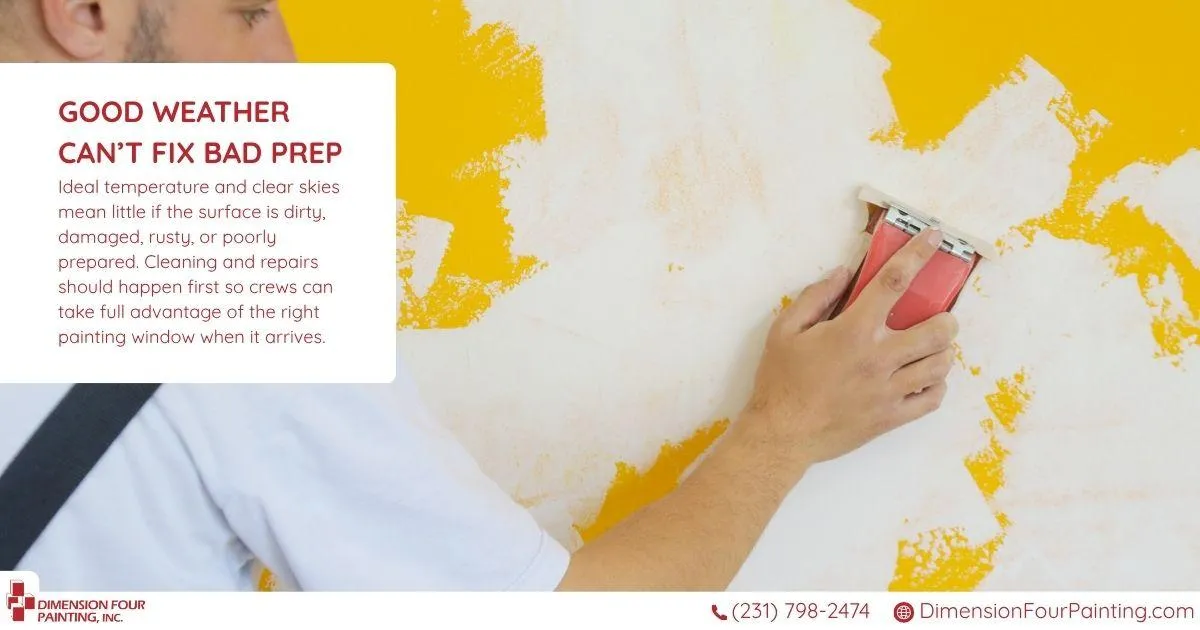
Good weather cannot compensate for poor surface preparation. Before painting begins, the exterior may require power washing, scraping, sanding, rust treatment, caulking, patching, priming, or repairs.
Planning these steps before the primary painting window helps keep the project moving efficiently once conditions are right.
For example, commercial power washing may remove chalking, dirt, mildew, road salt, and loose contamination. Once the surface dries, crews can identify coating failure, cracks, rust, and other conditions that need attention.
The better prepared the surface is, the easier it becomes to take advantage of good painting weather when it arrives.

When Should Michigan Businesses Schedule Exterior Painting?
For many businesses, the best strategy is to schedule the project before the ideal season actually begins. Commercial painting contractors often book projects in advance, particularly during the warmer months.
Planning early gives businesses more flexibility to coordinate around:
- Busy seasons
- Customer traffic
- Production schedules
- Planned shutdowns
- Deliveries
- Parking access
- Events
- Tenant operations
- School or facility calendars
It also gives the contractor time to inspect the building, identify repairs, select coatings, and develop a realistic schedule before weather becomes a factor. Waiting until peeling paint becomes urgent can reduce those options.
Signs You Should Not Wait Another Season
Good timing matters, but delaying a necessary repaint can sometimes cause more damage than working within a slightly narrower weather window.
Warning signs include:
- Peeling or flaking paint
- Exposed metal
- Surface rust
- Cracking coatings
- Failed caulk
- Bare masonry
- Blistering
- Water intrusion
- Widespread chalking
- Repeated coating failure
Once the protective coating system breaks down, the underlying building material becomes more exposed to weather.
Addressing deterioration earlier may help reduce the amount of repair required later.
The Best Time Depends on the Building, Not Just the Calendar
If you want a simple answer, late spring through early fall is generally the best time to paint exterior commercial surfaces in Michigan.
But the best actual day or week depends on much more.
A professional contractor considers the coating system, surface temperature, moisture, humidity, wind, sun exposure, cure time, and weather forecast before deciding whether work should proceed.
That flexibility is important in Michigan because ideal conditions do not always follow the calendar.
A carefully planned project can take advantage of suitable weather while avoiding conditions that shorten coating life.
Final Thoughts: Plan for the Season, Paint for the Conditions
The best time to paint exterior surfaces in Michigan is typically during the warmer, more stable months between late spring and early fall.
Late spring offers moderate temperatures and a chance to repair winter damage. Summer provides long working days and consistent warmth. Early fall can offer excellent application conditions while giving businesses a final opportunity to protect their buildings before winter.
But season alone should never determine the schedule.
Temperature, moisture, humidity, rain, wind, sunlight, surface condition, and coating specifications all influence whether a commercial exterior is truly ready for paint.
Dimension Four Painting provides professional commercial and industrial painting services throughout West Michigan. Our team evaluates surface conditions, weather, preparation requirements, and coating performance before work begins so your exterior receives more than a fresh appearance. It receives a finish designed to withstand Michigan conditions.
Ready to plan your next exterior painting project?
📞 Call 231-798-2474 today to discuss your facility, or request your free, no-obligation commercial painting estimate online.
Let’s find the right painting window and give your building protection that lasts.