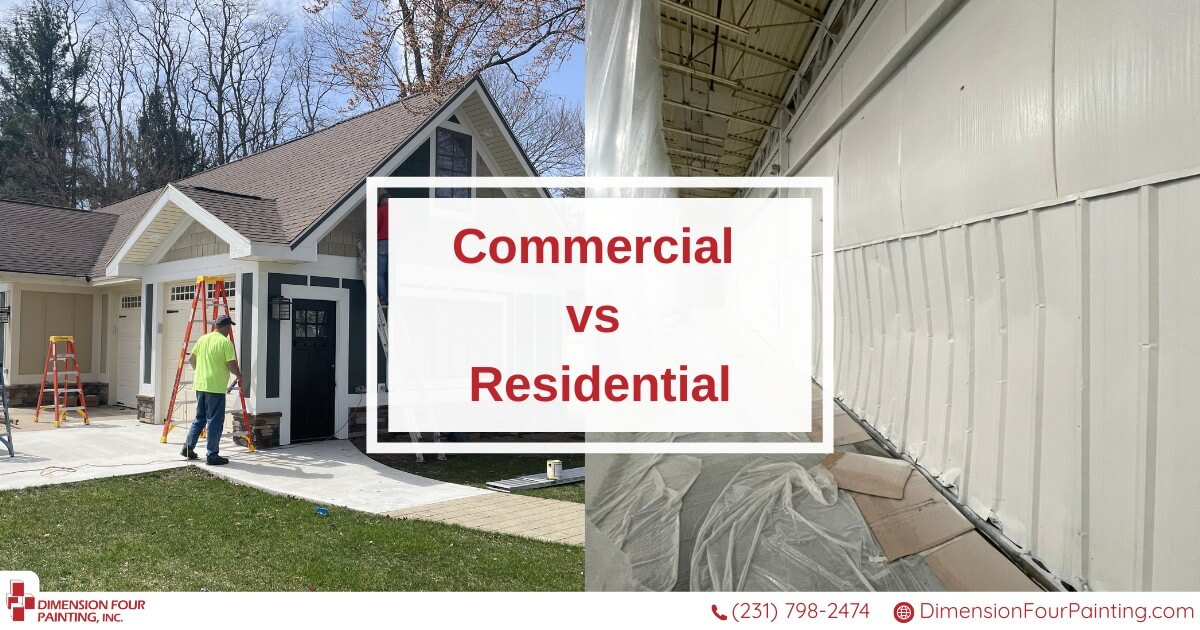
At a glance, painting may seem like the same job no matter where it happens. Walls are walls, paint is paint, and a good finish should look clean when the work is done. But in reality, the difference between a commercial painter and a residential painter is much bigger than most people realize.
Residential painting is usually focused on homes, smaller spaces, personal preferences, and standard interior or exterior finishes. Commercial painting, on the other hand, involves business operations, larger surfaces, specialized coatings, strict schedules, safety requirements, and long-term durability. The goal is not just to make a space look better. The goal is to protect the building, minimize disruption, and deliver a coating system that performs under real commercial use.
If you own or manage an office, healthcare facility, warehouse, school, retail space, or industrial building, choosing the right type of painter matters. Hiring someone without commercial experience can lead to delays, poor coating performance, safety risks, and higher long-term maintenance costs.
Here’s what separates a commercial painter from a residential painter, and why the distinction matters for your business.
Commercial Painters Work Around Business Operations
One of the biggest differences between commercial and residential painting is scheduling. Residential painters usually work during normal daytime hours while the homeowner is away or while rooms are temporarily unavailable. That approach does not always work in a business setting.
Commercial buildings have employees, customers, patients, tenants, vendors, and deliveries moving through them every day. A repaint cannot simply shut everything down. A professional commercial painter understands how to plan work around active operations.
That may include painting at night, working weekends, phasing the project by department, or completing high-traffic areas during off-hours. For example, an office corridor may need to be finished after employees leave, while a clinic waiting area may need to be completed between patient schedules. In a warehouse, work may need to align with production shifts, loading dock activity, or planned shutdowns.
A residential painter may be skilled at producing a clean finish, but commercial painting requires operational planning. The contractor needs to understand how the business runs and build the project around that reality.
Commercial Projects Require More Detailed Preparation
Surface preparation matters in every paint job, but in commercial buildings, the stakes are higher. Walls, ceilings, floors, doors, frames, masonry, steel, and concrete all experience different types of wear depending on how the facility is used.
A residential wall may need patching, sanding, and priming. A commercial wall may need degreasing, moisture checks, removal of failing coatings, surface profiling, containment, and specialty primers. In industrial facilities, preparation can determine whether the coating lasts for years or fails within months.
Commercial painters are trained to evaluate surfaces based on performance, not just appearance. They look for contaminants, adhesion issues, moisture, impact damage, cleaning exposure, and environmental conditions. A warehouse wall near equipment may need a different prep process than an office hallway or healthcare corridor.
This is where experience matters. If the surface is not properly prepared, the coating may peel, bubble, stain, or wear too quickly. In a business setting, that means more repairs, more downtime, and more cost.
Commercial Painters Use Different Coatings and Products
Residential painting usually involves standard interior and exterior paints designed for homes. These products work well for bedrooms, kitchens, siding, trim, and living spaces. Commercial buildings often need more durable and specialized systems.
A commercial painter may recommend coatings based on:
- Traffic level and surface wear
- Cleaning and disinfecting requirements
- Moisture, humidity, or temperature exposure
- Chemical or abrasion resistance
- Low-odor or low-VOC needs
- Corrosion control for metal surfaces
For example, healthcare facilities often require low or zero VOC coatings that can handle frequent disinfecting. Offices may need low-odor, washable finishes that allow spaces to return to service quickly. Industrial buildings may require high-build, corrosion-resistant systems for steel, block, ceilings, piping, or production areas.
The difference is not just brand preference. It is performance. Commercial coatings are selected based on how the space functions every day.
Safety Requirements Are More Complex in Commercial Spaces
Safety is another major difference between residential and commercial painting. A home painting project may involve ladders, drop cloths, and basic ventilation. Commercial projects often involve more people, larger spaces, higher surfaces, and more complex hazards.
A commercial painter may need to work around:
- Employees and customers
- Forklift traffic or production equipment
- High ceilings and lift equipment
- Active healthcare or office environments
- Fire exits, emergency routes, and access points
- Facility-specific safety rules
In warehouses and industrial buildings, this can also involve lockout areas, clear walkways, fall protection, containment, and coordination with facility managers. The painter is not only responsible for their crew. They also need to protect everyone using the building.
This is one reason businesses should be careful about hiring a painter who mainly does residential work. Even if they can paint well, they may not have the systems, insurance, equipment, or jobsite awareness required for commercial environments.
Commercial Painting Requires Stronger Project Management
A residential painting project may involve a homeowner, a small crew, and a simple scope of work. Commercial painting usually involves more moving parts.
There may be building managers, department heads, facilities teams, tenants, safety personnel, and business owners involved. The project may include multiple phases, restricted work areas, access limitations, specific coating requirements, and daily cleanup expectations.
A professional commercial painter provides structure. That means clear scopes, written schedules, coating specifications, communication updates, and final walkthroughs. Good project management keeps the job predictable and prevents confusion.
Here’s a simple comparison:
| Project Area | Residential Painter | Commercial Painter |
| Typical project type | Homes, rooms, siding, trim | Offices, healthcare, warehouses, retail, industrial facilities |
| Scheduling | Standard daytime work | Nights, weekends, phases, shutdown windows |
| Coatings | Standard interior/exterior paint | Low-VOC, industrial, washable, epoxy, specialty coatings |
| Safety needs | Basic jobsite safety | Facility safety, access control, lifts, active operations |
| Communication | Homeowner updates | Facility managers, teams, tenants, business stakeholders |
| Main goal | Appearance and comfort | Appearance, durability, safety, uptime, long-term performance |
This table shows why commercial painting is not just a larger version of residential painting. It is a different type of service with different expectations.
Commercial Painters Understand Durability and Maintenance
Commercial spaces are used harder than residential spaces. Hallways see constant foot traffic. Doors and frames get bumped by carts and equipment. Waiting rooms, offices, and lobbies need to stay clean and professional. Warehouses and industrial facilities deal with dust, impact, moisture, and heavy use.
Because of this, commercial painters think beyond the initial finish. They consider how the coating will hold up months and years after the project is completed. The right coating should be washable, durable, and appropriate for the environment.
This matters because repainting too often disrupts operations and increases costs. A professional commercial painter helps reduce maintenance by selecting products and prep methods that extend the life of the coating system.
In other words, a commercial painter is not just painting for today. They are painting for the way the building will be used over time.
The Finish Needs to Represent the Business
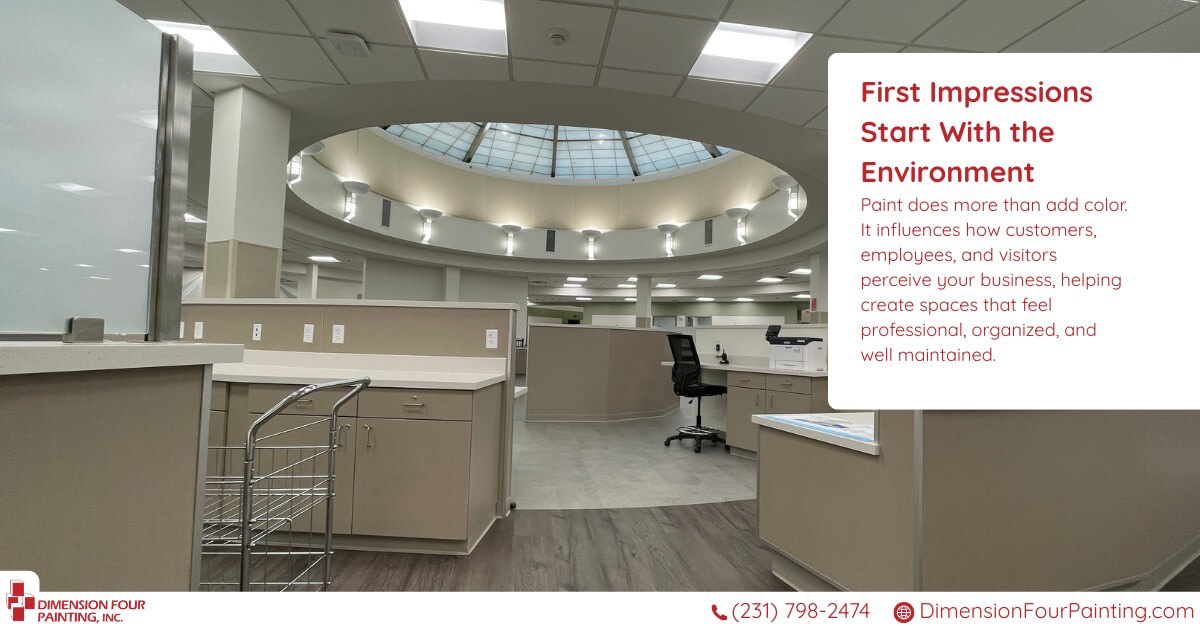
In a home, paint reflects personal taste. In a commercial building, paint reflects the business. Customers, employees, patients, vendors, and visitors all form opinions based on how a facility looks and feels.
A clean, consistent paint job can make a business feel organized, modern, and well cared for. Poor coverage, uneven lines, scuffed walls, mismatched colors, or rushed touch-ups can send the opposite message.
Commercial painters understand that the finish has a business purpose. Color can support branding, wayfinding, comfort, productivity, and customer experience. For example, an office may use neutral walls with branded accent colors, while a healthcare facility may use calming tones and easy-to-clean finishes. A warehouse may prioritize bright surfaces and high-visibility safety markings.
The paint job should serve the space, not just cover it.
Commercial Painters Are Equipped for Scale
Commercial buildings often involve larger surfaces, taller walls, more rooms, and tighter timelines than residential projects. Completing that work efficiently requires the right crew size, equipment, and process.
A commercial painter may use lifts, sprayers, containment systems, floor protection, commercial-grade coatings, and specialized prep tools. They also have the staffing to complete larger projects without stretching the timeline unnecessarily.
Residential painters may not always have the equipment or manpower to handle these demands efficiently. That can lead to longer projects, inconsistent results, or scheduling problems.
For businesses, speed matters, but not at the expense of quality. The right commercial painter can deliver both.
Hiring the Wrong Type of Painter Can Cost More Later
Hiring a residential painter for a commercial project may look cheaper upfront, but it can create problems over time. If the wrong coating is used, the surface is underprepared, or the schedule is poorly managed, the business may end up paying for repairs, rework, or early repainting.
Common issues include peeling paint, uneven coverage, early scuffing, poor adhesion, downtime, and disruption to normal operations. In healthcare, industrial, or public-facing spaces, mistakes can be even more costly because the work affects safety, cleanliness, and customer perception.
The issue is not whether residential painters are skilled. Many are excellent at what they do. The issue is whether their experience matches the needs of a commercial building.
For business owners and facility managers, the safer choice is to hire a contractor built for commercial work from the start.
When Should You Hire a Commercial Painter?
A commercial painter is the right choice when the project affects business operations, public spaces, employee productivity, safety, or long-term building maintenance.
You should strongly consider hiring a commercial painter if your project involves large areas, occupied workspaces, medical or industrial environments, exterior commercial surfaces, specialty coatings, high ceilings, strict scheduling, or safety requirements.
Even if the space looks simple, the right contractor can identify factors that may affect the final result. That includes surface condition, coating compatibility, odor control, drying time, access, and how the work can be completed without disrupting your team.
If the project matters to your business, it should be handled by someone who understands business environments.

Final Thoughts: Commercial Buildings Need Commercial Expertise
The difference between a commercial painter and a residential painter comes down to more than project size. Commercial painting requires specialized planning, durable coatings, surface preparation, safety awareness, scheduling flexibility, and professional project management.
A commercial building is an investment. The painter you choose should protect that investment, not create new problems. When the work is done correctly, your facility looks better, performs better, and stays easier to maintain over time.
Dimension Four Painting brings generations of commercial and industrial painting experience to businesses across West Michigan. From offices and healthcare facilities to warehouses and industrial spaces, our team understands how to complete painting projects safely, efficiently, and with minimal disruption.
Ready to work with a commercial painter built for business environments?
📞 Call 231-798-2474 today to discuss your project, or request your free, no-obligation commercial painting estimate online. Let’s get your facility painted the right way, with the right team from the start.