
Floors in commercial and industrial environments take constant abuse. Forklifts, heavy equipment, foot traffic, spills, and cleaning chemicals all put pressure on the surface every day. Choosing the right coating system is critical if you want a floor that stays safe, durable, and easy to maintain.
One of the most common questions facility managers ask is epoxy vs floor paint: which one is better?
At first glance, the two can look similar. Both add color, improve appearance, and protect the underlying concrete. But in terms of performance, durability, and long-term value, epoxy and traditional floor paint behave very differently.
Understanding those differences can help you choose the right system for your facility and avoid costly repairs down the road.
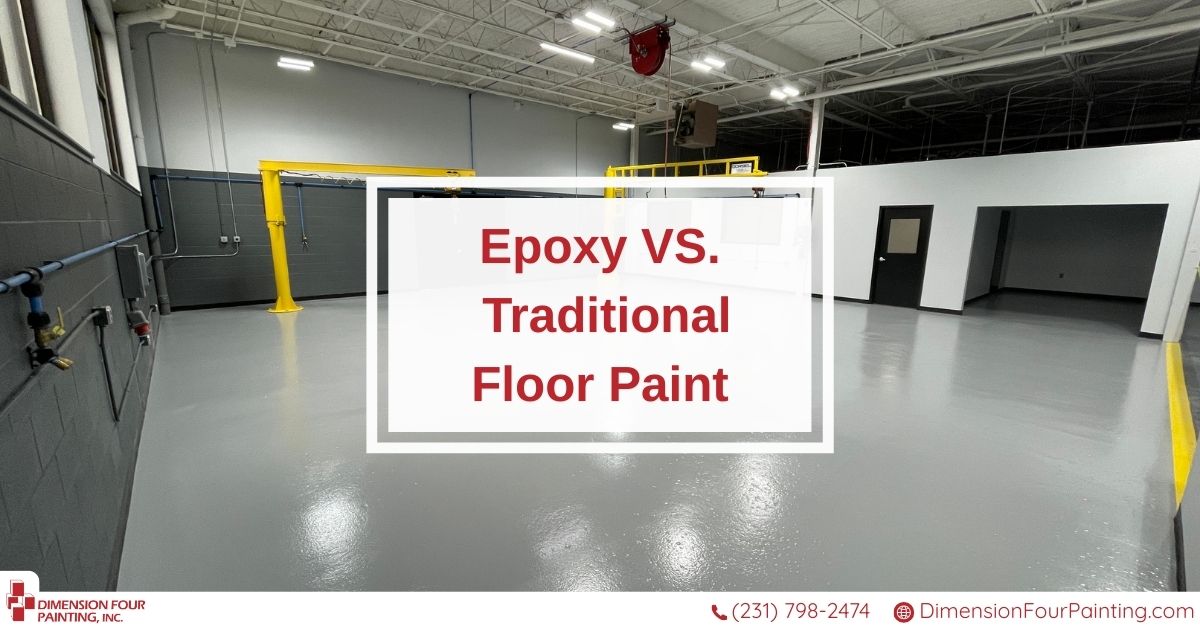
Understanding the Basics: Epoxy vs Floor Paint
Traditional floor paint is typically a single-component coating applied directly to the surface. It dries as the solvent evaporates and forms a thin protective film. This makes it relatively easy to apply and affordable, but it also means the coating sits on top of the concrete rather than bonding deeply with it.
Epoxy coatings work differently. They are created by mixing a resin and a hardener that chemically react and cure together. When applied properly, epoxy bonds tightly to the concrete surface and forms a thick, durable layer designed to withstand heavy use.
The difference between these two systems becomes especially clear when you compare their durability, maintenance needs, and performance under stress.
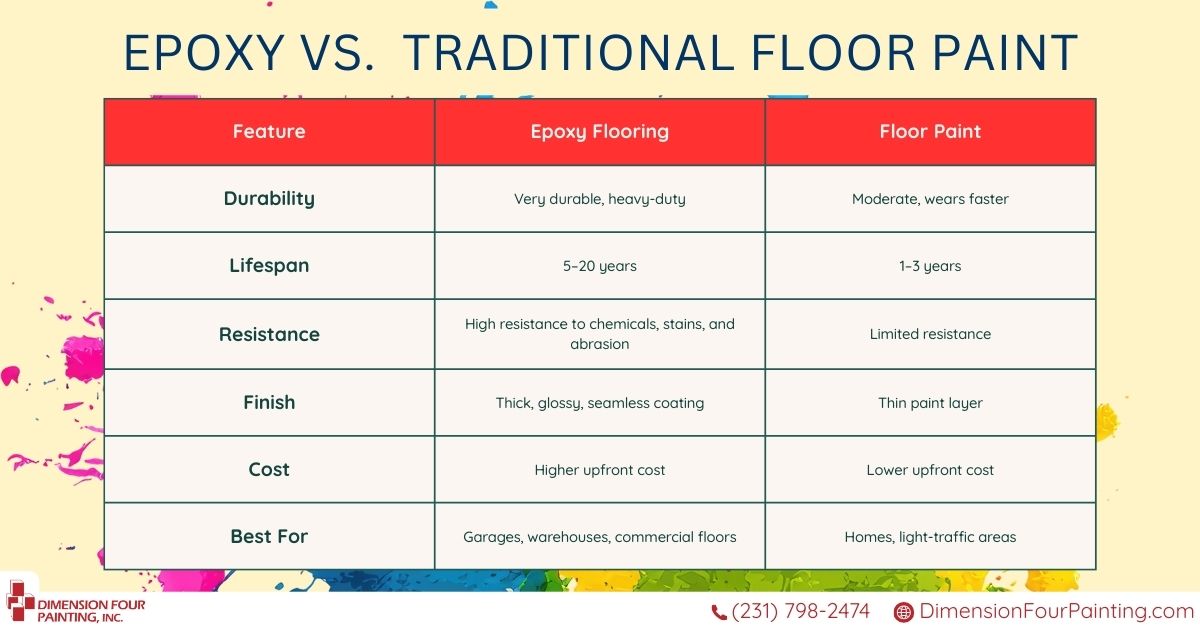
| Feature | Epoxy Coating | Traditional Floor Paint |
| Bond strength | Chemically bonds to concrete | Sits on surface |
| Thickness | Thick, durable coating | Thin paint layer |
| Durability | High resistance to wear and impact | Moderate durability |
| Chemical resistance | Excellent | Limited |
| Lifespan | 5–10+ years in many environments | Often 1–3 years |
| Installation complexity | Professional application recommended | Easier to apply |
Both systems have their place, but the environment and level of use in your facility will determine which one performs better.
If you need an epoxy system for your floor, please see our Industrial Floor Coating page.
Durability and Performance in Real-World Facilities
In environments with heavy traffic or mechanical equipment, durability becomes the deciding factor.
Epoxy coatings are designed specifically for these conditions. Once cured, they form a hard, seamless surface that resists abrasion, impact, and chemical exposure. This makes them ideal for industrial spaces, warehouses, manufacturing plants, and automotive facilities where floors experience constant stress.
Traditional floor paint performs adequately in lighter-duty environments such as storage rooms, utility areas, or spaces with minimal equipment traffic. However, when exposed to forklifts, pallet jacks, or repeated heavy loads, painted floors often begin to wear quickly.
Over time, paint coatings may chip, peel, or fade, especially if the surface preparation was not thorough. In contrast, epoxy systems are designed to hold up under those same conditions for years.
Maintenance and Longevity
Paint maintenance requirements are another important difference when comparing epoxy vs floor paint.
Epoxy coatings create a smooth, sealed surface that is easier to clean and maintain. Dirt, oil, and liquids remain on the surface instead of soaking into the concrete. In facilities where cleanliness and efficiency matter, this can significantly reduce maintenance time.
Traditional floor paint offers less protection against stains and wear. As the coating deteriorates, areas may need frequent touch-ups or complete repainting to maintain appearance and functionality.
Over the lifespan of the floor, these maintenance cycles can add up. While epoxy may have a higher initial installation cost, it often reduces long-term maintenance and repainting expenses.
Safety and Workplace Visibility
Floor coatings also contribute to workplace safety. Clear floor markings, defined walkways, and slip-resistant surfaces help reduce accidents and improve traffic organization within a facility.
Epoxy systems can incorporate safety features such as textured finishes or embedded aggregates that improve traction. They also hold color and markings longer, which helps maintain clearly defined zones for equipment, storage, and pedestrian movement.
Traditional floor paint can still be used for safety markings, but those markings may fade or wear more quickly in high-traffic areas.
In busy environments, maintaining visible walkways and traffic lanes is critical for both efficiency and employee safety.
Cost Considerations: Short-Term vs Long-Term Value
Cost is often one of the first considerations when choosing a floor coating system.
Traditional floor paint typically has a lower upfront cost because it is simpler to apply and requires fewer materials. For facilities with tight budgets or low-traffic areas, this may be a practical short-term solution.
Epoxy coatings involve more preparation, materials, and professional installation, which increases the initial cost. However, that investment often pays off over time because epoxy floors last longer and require fewer repairs or repainting cycles.
When evaluating epoxy vs floor paint, it’s important to consider the total lifecycle cost, not just the initial price.
Choosing the Right System for Your Facility
The right choice depends largely on how the space is used. Different environments place different demands on the floor surface.
Facilities that benefit most from epoxy coatings include:
- Manufacturing plants
- Warehouses and distribution centers
- Automotive and equipment shops
- Commercial kitchens
- Facilities with heavy equipment traffic
Traditional floor paint may still be suitable for lighter-use environments such as:
- Storage areas
- Mechanical rooms
- Utility spaces
- Small offices or maintenance rooms
Matching the coating system to the demands of the environment helps ensure the floor performs as expected.
Professional Installation Makes the Difference
Regardless of which system you choose, proper preparation is essential. Concrete surfaces must be cleaned, repaired, and profiled correctly before any coating is applied.
Without proper preparation, even the best coating system can fail prematurely.
Professional contractors use specialized equipment such as grinders and shot blasters to prepare the concrete surface. This step ensures the coating bonds properly and performs as designed.
For epoxy coatings in particular, professional installation helps ensure correct mixing, application thickness, and curing conditions.

Choosing the Right Floor Coating
When comparing epoxy vs floor paint, the key difference comes down to durability and long-term performance. Floor paint can be a practical option for lighter-duty spaces, while epoxy coatings provide superior strength, chemical resistance, and longevity in demanding environments.
Choosing the right system helps protect your concrete floors, improve workplace safety, and reduce long-term maintenance costs.
If you’re evaluating flooring upgrades for your facility, working with an experienced contractor can help you determine the best solution for your specific environment.
Ready to upgrade your facility floors?
📞 Call 231-798-2474 today to discuss your project, or request your free, no-obligation estimate online.
Let’s find the right coating system for your space.