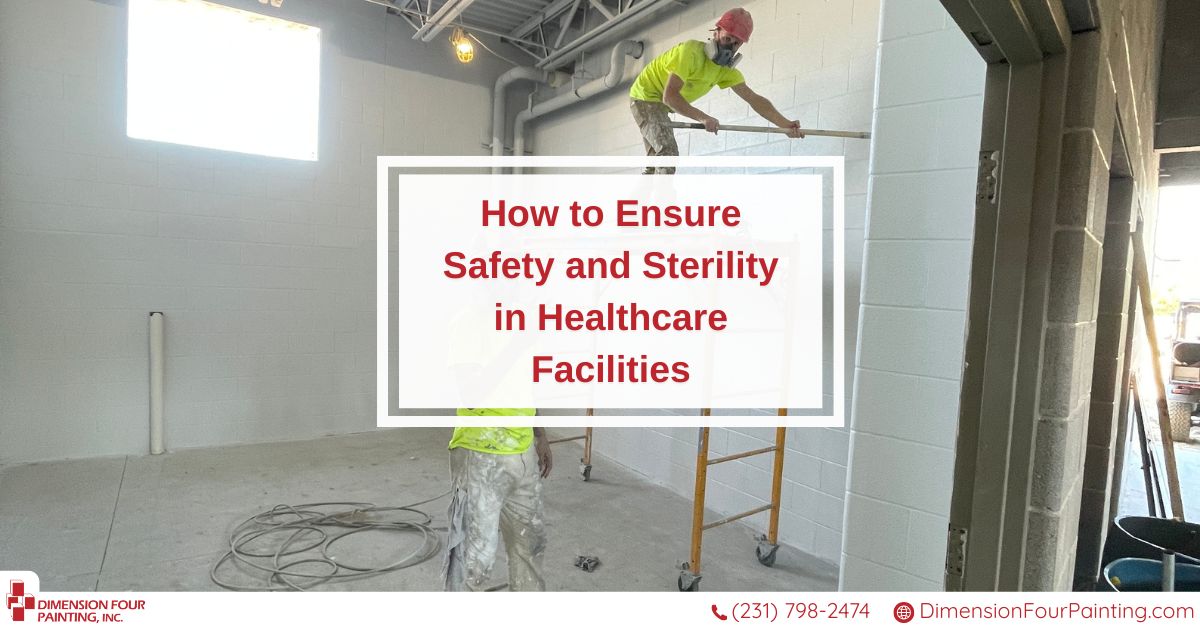
Painting inside a healthcare facility is fundamentally different from painting any other type of building. Hospitals, clinics, medical offices, and specialty care centers operate in environments where safety, cleanliness, and infection control are critical every hour of the day. A poorly planned paint project doesn’t just create inconvenience; it can disrupt care, compromise sterility, and introduce unnecessary risk.
That’s why healthcare facility painting must be approached with a higher standard of preparation, coordination, and painting safety than typical commercial projects. From coating selection to containment methods, every step must be carefully managed to protect patients, staff, and sensitive medical spaces.
This article explains what makes healthcare painting unique, why safety and sterility must come first, and how the right contractor ensures your facility stays operational while improvements are made.
Why Painting Safety Is Critical in Healthcare Environments
In healthcare settings, painting is not a cosmetic task; it’s a clinical-support function. Walls, ceilings, and surfaces play an active role in hygiene, wayfinding, patient comfort, and infection prevention. Any disruption to these systems can affect outcomes.
Healthcare painting safety focuses on controlling risks such as:
- Airborne dust and particulates
- Paint odors and chemical exposure
- Cross-contamination between spaces
- Noise and vibration near patient areas
- Obstructed corridors or life-safety routes
Unlike other facilities, healthcare buildings cannot simply “shut down” during a project. Patients still need care, staff still need access, and sterile environments must remain protected at all times. This makes planning and execution just as important as the paint itself.
How Healthcare Facility Painting Protects Safety, Sterility, and Daily Operations
Healthcare environments demand a higher standard of planning and control than any other commercial setting. Patient care areas, sterile zones, public spaces, and back-of-house operations all coexist under one roof, each with different risks and requirements. Effective healthcare facility painting accounts for these differences through tailored containment, coating selection, and scheduling – rather than a one-size-fits-all approach.
The table below shows how specific healthcare spaces influence painting safety requirements and execution strategies.
| Healthcare Area | Primary Risk Factors | Painting Safety Requirements | Why It Matters |
| Patient Rooms & Recovery Areas | Vulnerable occupants, air quality sensitivity | Low- or zero-VOC coatings, odor control, quiet scheduling | Protects patient comfort and prevents respiratory irritation or stress. |
| Exam & Procedure Rooms | Sterility, contamination risk | Full containment, after-hours work, thorough daily cleanup | Prevents airborne particles from entering clinical environments. |
| Laboratories & Pharmacies | Chemical exposure, precision environments | Specialized coatings, strict surface prep, controlled access | Maintains compliance and avoids cross-contamination. |
| Waiting Rooms & Reception Areas | Public traffic, continuous use | Low-odor systems, phased painting during operating hours | Keeps patient flow uninterrupted and spaces welcoming. |
| Sterile Corridors & Staff-Only Zones | Infection control, constant movement | Sealed work zones, protected pathways, rapid return to service | Maintains clean circulation routes essential for care delivery. |
| Administrative & Back-of-House Areas | Operational continuity | Flexible scheduling, durable finishes | Supports staff productivity without unnecessary downtime. |
Across all these areas, containment is non-negotiable. Dust, debris, and airborne particles must be controlled so they do not migrate into patient care zones. This includes isolating work areas, sealing vents and openings, maintaining clear and protected pathways, and performing daily cleanup before spaces are returned to use. These measures are critical for protecting patients – especially those with compromised immune systems – and for maintaining compliance with facility standards.
Coating selection reinforces these safeguards. Healthcare-appropriate paints are chosen not only for low VOC levels, but also for durability under frequent cleaning. Scrub-resistant, stain-resistant finishes that tolerate hospital-grade disinfectants ensure walls remain hygienic and intact between repaint cycles. Using the wrong product can lead to early breakdown, discoloration, or surfaces that harbor contaminants.
Finally, scheduling ties everything together. Healthcare painting must adapt to patient care schedules, not disrupt them. Night and weekend work, phased department-by-department execution, quiet-hour coordination, and temporary room closures allow painting to move forward while care continues uninterrupted. In healthcare settings, painting safety is as much about timing and coordination as it is about materials and technique.
When these elements work together, painting becomes a support function for patient care, rather than a risk to it.
Protecting Equipment, Finishes, and Adjacent Spaces
Healthcare facilities house some of the most expensive and sensitive equipment found in any commercial environment.
- Imaging machines
- Monitoring systems
- Built-in cabinetry
- Specialty fixtures
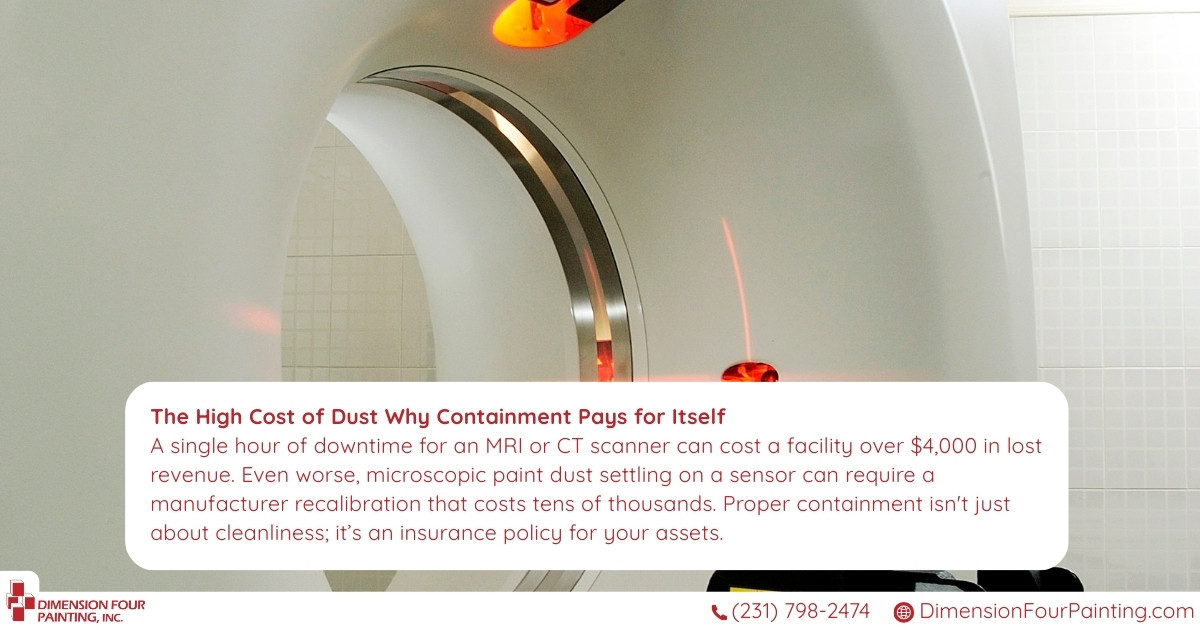
These are not only costly to replace; they are often mission-critical to patient care. Even minor overspray, dust infiltration, or accidental contact can lead to equipment shutdowns, recalibration, or canceled procedures.
Professional healthcare painting teams treat protection as a core part of the job, not an afterthought. Before work begins, they coordinate closely with facilities staff to understand what must remain operational and what can be temporarily isolated. Equipment is fully covered and sealed, floors and adjacent finishes are protected, and emergency systems such as call buttons, alarms, and life-safety signage are kept accessible at all times.
For example, painting near a nurses’ station or monitoring area may require additional barriers to prevent dust from settling into electronic components. In diagnostic or treatment areas, painters often stage work so that equipment remains untouched and usable during the day, with painting completed after hours. This level of planning prevents costly damage, avoids service interruptions, and ensures painting improves the space without introducing new risks.
Clear Communication and Documentation
In healthcare environments, poor communication isn’t just inconvenient; it can compromise safety. Facility managers, infection-prevention teams, clinicians, and support staff all need to understand what work is happening, where it’s happening, and how it may affect patient flow or access.
Experienced healthcare painting contractors establish clear communication channels from the start. This includes detailed scopes of work that define exact areas, coatings, and containment methods; clearly marked schedules and work zones; and advance notice of any changes that could affect operations. During active phases, daily updates help facilities teams plan staffing, room usage, and cleaning protocols with confidence.
For instance, if a corridor or room must be temporarily closed, staff are informed well in advance so patient routing can be adjusted. If work needs to shift due to an unexpected clinical priority, the contractor adapts without confusion or delay. This level of transparency builds trust, reduces last-minute conflicts, and ensures painting work supports care delivery instead of disrupting it.
Why Specialized Experience Matters
Not every commercial painter is equipped to work in healthcare environments. Healthcare facility painting demands a strong understanding of painting safety, infection control, and coordination within active clinical spaces.
Specialized healthcare painting contractors offer:
- Proven experience working in live medical environments
- Familiarity with healthcare protocols, access requirements, and workflows
- Knowledge of compliant, healthcare-appropriate coating systems
- The ability to work quietly, cleanly, and on tightly controlled schedules
This level of expertise reduces risk and ensures painting work supports patient care and facility operations.
The Long-Term Value of Proper Healthcare Painting
When healthcare painting is done correctly, the impact goes far beyond fresh walls. Paint systems in medical environments actively support safety, cleanliness, patient experience, and operational efficiency. When planned and executed with painting safety in mind, healthcare facility painting becomes part of the care environment – not just a maintenance task.
The table below shows how proper healthcare painting methods translate into real, long-term value for facilities.
| Proper Healthcare Painting Practice | Operational Impact | Long-Term Value to the Facility |
| Low-VOC, healthcare-appropriate coatings | Improves indoor air quality and reduces odor exposure | Safer environments for patients and staff, especially those with respiratory sensitivities |
| Containment and clean work zones | Prevents dust and particles from entering care areas | Stronger infection-control support and reduced cross-contamination risk |
| Durable, scrub-resistant finishes | Walls withstand frequent cleaning and disinfectants | Longer coating life with fewer repaints and touch-ups |
| Phased scheduling and off-hour work | Painting occurs without interrupting patient flow | Minimal disruption to care delivery and daily operations |
| Consistent surface prep and priming | Coatings bond correctly and perform as designed | Lower long-term maintenance costs and predictable repaint cycles |
| Thoughtful color and finish selection | Creates calm, professional, easy-to-navigate spaces | Improved patient comfort, staff morale, and facility perception |
In healthcare settings, paint is not purely aesthetic – it’s functional. It supports hygiene, durability, and the overall experience of care. Investing in proper methods and painting safety protects patients, supports staff, and reduces facility risk over time.
When healthcare painting is approached with this long-term view, facilities see measurable returns every day they remain in operation.

Final Thoughts: Protecting Care Through Smart Painting Practices
Healthcare facility painting requires more than technical skill; it requires responsibility. Every decision, from surface preparation to scheduling, affects patient experience, staff efficiency, and facility safety.
By prioritizing painting safety, using healthcare-appropriate coatings, and working with a contractor experienced in clinical environments, healthcare facilities can improve their spaces without compromising care.
If you’re planning a repaint in a medical office, clinic, or healthcare facility, don’t leave safety to chance.
Ready to protect your facility and your patients?
📞 Call 231-798-2474 today to discuss your project, or Request Your Free, No-Obligation Healthcare Painting Estimate online.
Let’s improve your space while keeping safety, sterility, and care at the forefront; now and for the long haul.