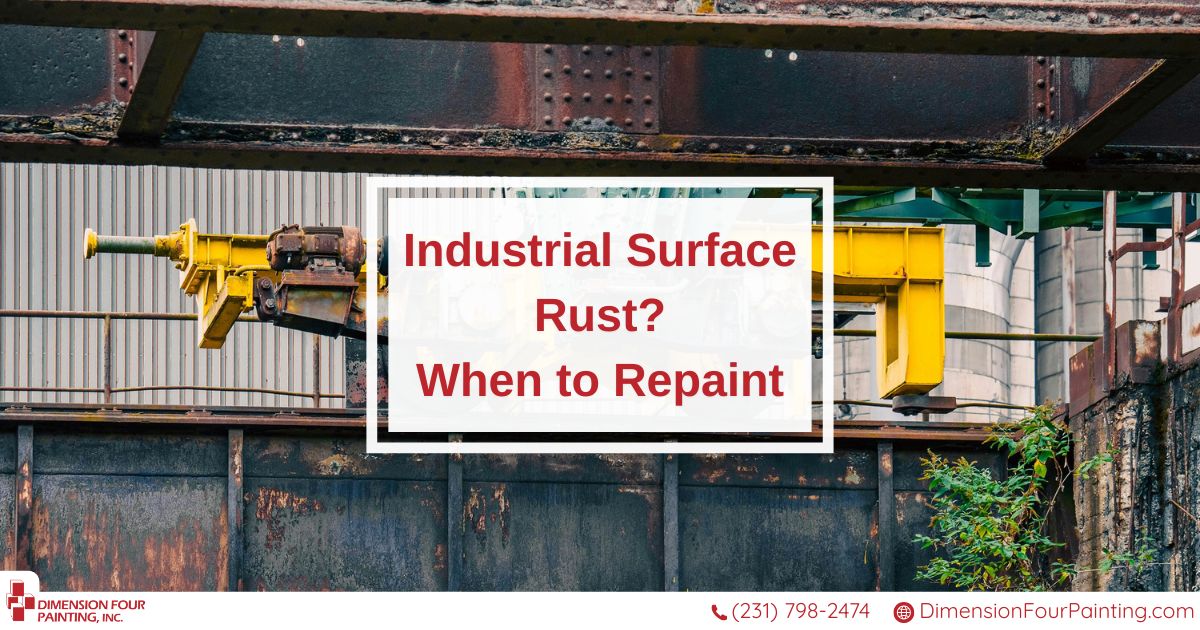
Rust is easy to ignore when it first appears.
A few orange spots on a steel column, railing, pipe, equipment frame, or exterior panel may not look serious. In an industrial facility, small areas of surface rust can quickly become part of the background, especially when production, maintenance, and daily operations take priority.
But rust is more than a cosmetic problem.
Once protective coatings begin to fail, exposed metal reacts with moisture and oxygen. What starts as light surface rust can eventually progress into deeper corrosion, coating failure, pitting, and structural deterioration.
For facility owners and maintenance teams, the important question is not simply whether rusty metal looks bad. It is whether the existing coating is still protecting the surface.
Knowing when to repaint rusty metal can help prevent a relatively simple maintenance project from becoming a much more expensive repair.
What Is Surface Rust?
Surface rust is the early stage of corrosion that forms when iron or steel is exposed to moisture and oxygen.
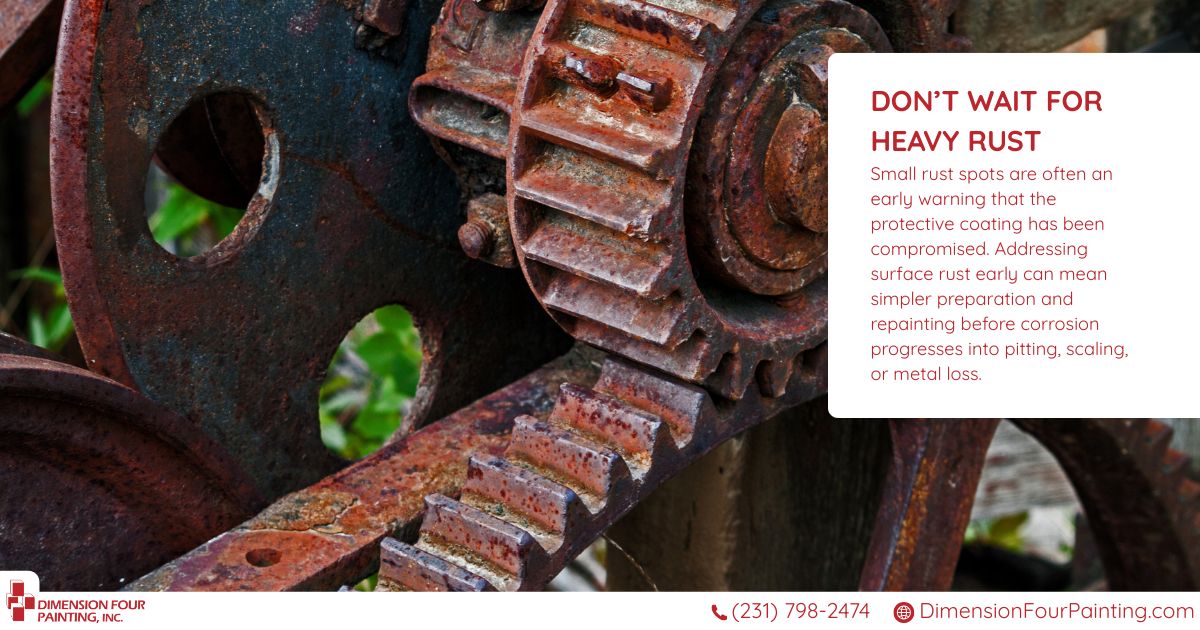
It often appears as orange, reddish-brown, or dark discoloration on the metal surface. At this stage, the corrosion may still be relatively shallow and confined to the exterior of the material.
That does not mean it should be ignored.
Paint and industrial coatings act as a barrier between metal and the surrounding environment. When that barrier becomes damaged, worn, cracked, or thin, moisture can reach the steel underneath.
Over time, corrosion continues to spread beneath the coating and across exposed areas.
Industrial environments can accelerate this process because metal surfaces may also be exposed to humidity, condensation, chemicals, washdowns, temperature changes, road salt, oils, and abrasive debris.
Surface Rust vs. Deeper Corrosion
Not all rust represents the same level of damage.
Light surface rust may be manageable with proper cleaning, preparation, priming, and repainting. More advanced corrosion can involve scaling, pitting, metal loss, or structural weakening that may require additional repair before any coating system is applied.
Here is a simple comparison:
| Condition | What It Looks Like | Typical Response |
| Light surface rust | Small orange or brown spots | Clean, prepare, prime, and repaint |
| Widespread surface rust | Larger areas of oxidation | More extensive surface preparation and recoating |
| Flaking rust or scale | Loose layers breaking away | Remove unstable material and inspect the metal |
| Pitting | Small holes or depressions in steel | Evaluate depth and repair before coating |
| Significant metal loss | Thinning, deformation, structural damage | Structural evaluation may be required |
The earlier corrosion is addressed, the easier it usually is to control.
Signs It May Be Time to Repaint Rusty Metal
A maintenance team does not need to wait until metal is heavily corroded before scheduling repainting.
There are several warning signs that the existing protective coating is beginning to fail.
Look for:
- Orange or brown rust spots appearing through the paint
- Peeling, cracking, or flaking coatings
- Bubbling or blistering around metal surfaces
- Exposed steel around scratches or impact damage
- Rust developing around bolts, welds, seams, and edges
- Chalky or faded exterior coatings
- Repeated corrosion in previously repaired areas
A few isolated rust spots may only require localized maintenance. But if corrosion is appearing across multiple surfaces, it may indicate that the coating system has reached the end of its useful life.
Why Rust Often Starts at Edges, Welds, and Fasteners
Corrosion does not always appear evenly across a surface.
Edges, corners, welds, bolts, joints, and fasteners are common starting points because coatings can be thinner or more difficult to apply evenly in these areas.
Mechanical movement can also create small cracks around connections. Once moisture enters those openings, corrosion can begin underneath the coating.
This is why industrial painting requires careful attention to detail. Simply spraying a large flat surface is not enough. A protective system needs consistent coverage around the areas most vulnerable to failure.
During repainting, professional crews often pay extra attention to these locations during preparation and priming.
Moisture Is One of the Biggest Drivers of Corrosion
Rust needs moisture.
In industrial buildings, that moisture can come from many sources beyond direct rain exposure. Condensation, high humidity, washdowns, leaks, steam, temperature swings, and exterior air can all contribute to corrosion.
Metal near loading docks, exterior walls, roof openings, mechanical rooms, or production areas may experience frequent changes in temperature. When warm, humid air contacts a colder steel surface, condensation can form.
Even small amounts of repeated moisture exposure can gradually damage a coating.
Exterior steel faces additional challenges from snow, rain, road salt, and freeze-thaw cycles. In West Michigan, seasonal weather can place significant stress on painted metal surfaces.
If rust keeps returning in the same location, the problem may not be the paint alone. The moisture source should also be investigated.
Can You Paint Directly Over Surface Rust?
In most industrial applications, simply painting over visible rust is not a long-term solution.
New paint may temporarily hide the corrosion, but rust underneath the coating can continue spreading. Eventually, the new coating may blister, peel, or separate from the metal.
The unstable rust needs to be removed or properly treated first.
Preparation may include wire brushing, scraping, sanding, grinding, abrasive blasting, or other mechanical methods depending on the severity of corrosion and the coating specification.
The goal is to remove loose rust and failing coatings while creating a stable surface for the new primer and topcoat.
A corrosion-resistant primer may then be applied before the protective finish system.
Surface Preparation Determines How Long the Repaint Lasts
The quality of an industrial repaint depends heavily on what happens before the final coat is applied.
Rusty metal must be evaluated carefully because corrosion can continue beneath seemingly intact paint.
A typical preparation process may include:
- Inspecting the metal and existing coating
- Identifying corrosion, moisture, and contamination
- Removing loose rust and failing paint
- Cleaning oils, grease, dust, and residue
- Repairing damaged areas where necessary
- Creating the required surface profile
- Applying the appropriate primer
- Installing the protective coating system
Skipping preparation can leave corrosion trapped beneath the new coating.
When that happens, the surface may look good temporarily but fail much sooner than expected.
Why Primer Matters on Rusty Metal
Primer plays an important role in protecting industrial steel.
A properly selected primer helps create adhesion between the prepared metal and the topcoat while also providing corrosion resistance.
Different environments may require different primer systems. Steel exposed to humidity, chemicals, exterior weather, or frequent cleaning may need stronger protection than metal located in a dry interior area.
Primer selection should also be compatible with the existing substrate and final coating.
Using the wrong product can reduce adhesion or create compatibility problems between layers.
A professional industrial painter considers the coating system as a whole rather than treating primer and paint as separate decisions.
When Localized Touch-Ups Are Enough
Not every rust spot requires repainting an entire facility.
Localized maintenance can make sense when corrosion is limited to a small area and the surrounding coating remains firmly bonded and in good condition.
Examples may include:
- A few scratches caused by equipment
- Small rust spots around fasteners
- Minor damage to railings or guards
- Isolated corrosion near door frames or loading areas
- Small chips exposing bare steel
These areas can often be cleaned, prepared, primed, and touched up before the corrosion spreads.
Regular inspections make this type of preventive maintenance easier. Catching small failures early allows facility teams to correct them before they become larger coating projects.
When a Full Repaint Makes More Sense
Localized repairs become less practical when rust is widespread or the existing coating is failing across large areas.
A full repaint may be the better choice when:
- Rust appears repeatedly throughout the facility
- Large sections of paint are peeling or flaking
- The coating has become thin, faded, or chalky
- Multiple repairs have already been performed
- Corrosion is spreading beneath existing paint
- The coating system no longer matches the facility environment
- Maintenance costs are increasing year after year
At that point, repeated spot repairs may cost more than properly preparing and recoating the entire surface.
A full repaint also gives the facility an opportunity to upgrade to a more durable coating system.
Different Industrial Surfaces Rust at Different Rates
Corrosion exposure varies significantly throughout an industrial facility.
| Surface | Common Corrosion Risk |
| Structural steel | Humidity, condensation, roof leaks |
| Exterior metal panels | Rain, snow, UV exposure, temperature swings |
| Piping | Condensation, chemical exposure, leaks |
| Railings and guards | Hand contact, impact, cleaning |
| Equipment frames | Oil, chemicals, abrasion |
| Loading dock steel | Moisture, salt, traffic damage |
| Tanks and vessels | Chemical exposure, moisture, temperature |
| Doors and frames | Frequent contact and exterior weather |
Because conditions vary, a single coating system may not always be appropriate for every surface.
A professional industrial painting contractor for machines and equipment can help identify where higher-performance coatings are necessary and where a simpler system may be sufficient.
Rust Can Spread Beneath Paint Before You See It
One of the challenges with corrosion is that visible rust does not always show the full extent of the problem.
Moisture can enter through small cracks, scratches, seams, and coating defects. Corrosion may then spread underneath surrounding paint before obvious peeling appears.
Blisters and bubbles can be early signs that something is happening below the surface.
When these areas are opened during preparation, the rusted section may be larger than it originally appeared.
This is another reason why simply painting over discoloration is risky. The surface needs to be evaluated before the extent of the repair can be determined.
The Cost of Waiting Too Long
Delaying rust maintenance may save money in the short term, but corrosion does not stop on its own.
As rust progresses, preparation becomes more difficult. Instead of cleaning and repainting light surface rust, crews may need to remove heavy scale, repair damaged steel, replace components, or address deeper structural concerns.
The project may also require more downtime and more extensive containment.
Preventive repainting helps interrupt this cycle before corrosion becomes severe.
A relatively straightforward coating project today can help avoid a much larger repair later.
How Professional Industrial Painting Helps Control Corrosion
Professional industrial painting is not simply about making rusty metal look new again.
The objective is to restore a protective barrier and slow future corrosion.
A professional process typically includes:
- Evaluating the extent of corrosion
- Identifying environmental exposure
- Removing unstable coatings and rust
- Cleaning and profiling the surface
- Selecting corrosion-resistant primers
- Applying compatible industrial coatings
- Paying special attention to edges, seams, and welds
- Allowing proper cure time before returning the area to service
The coating system should be chosen based on how the surface is actually used.
A dry warehouse column may need a different system than exterior steel exposed to weather or piping exposed to condensation and chemicals.
Build Rust Inspection Into Routine Maintenance
The easiest rust problem to fix is the one caught early.
Facility teams should regularly inspect metal surfaces as part of preventive maintenance. Pay particular attention to areas exposed to moisture, chemicals, traffic, impact, or changing temperatures.
Early inspection can identify small coating failures before they spread.
Keeping records of where rust repeatedly appears can also help identify larger facility issues such as condensation, leaks, chemical exposure, or inadequate ventilation.
Industrial paint should be viewed as part of an asset protection strategy, not just a cosmetic finish.

Repaint Before Surface Rust Becomes a Bigger Problem
Surface rust is an early warning that the protective barrier around your metal is beginning to fail.
A few small spots may only require localized repair. But widespread rust, peeling paint, blistering, recurring corrosion, or damaged coatings are signs that a more complete repaint may be necessary.
The key is addressing corrosion before it progresses into deeper metal damage.
Proper preparation, corrosion-resistant primers, and coatings selected for the actual facility environment can significantly extend the life of industrial metal surfaces.
Dimension Four Painting provides professional industrial painting services throughout West Michigan. We help facilities evaluate rusted surfaces, prepare metal correctly, and install durable coating systems designed for demanding commercial and industrial environments.
Ready to protect your facility before surface rust turns into a larger repair?
📞 Call 231-798-2474 today to discuss your project, or request your free, no-obligation industrial painting estimate online.
Let’s stop corrosion early and keep your facility protected for the long haul.