
Floor safety is one of the most overlooked parts of facility maintenance, until an accident happens. In commercial and industrial environments, slick concrete, moisture, spills, and heavy traffic create conditions where slips and falls can occur quickly and unexpectedly. That’s why many businesses are investing in slip resistant floor coatings as part of their long-term safety strategy.
These coatings do more than improve traction. They help define safer work environments, reduce liability exposure, and improve confidence for employees, customers, and visitors moving through the space. In facilities where floors are exposed to water, oils, cleaning chemicals, or constant foot traffic, a standard coating system often isn’t enough.
Understanding where slip resistant floor coatings matter most helps businesses make smarter decisions about safety, durability, and long-term facility performance.
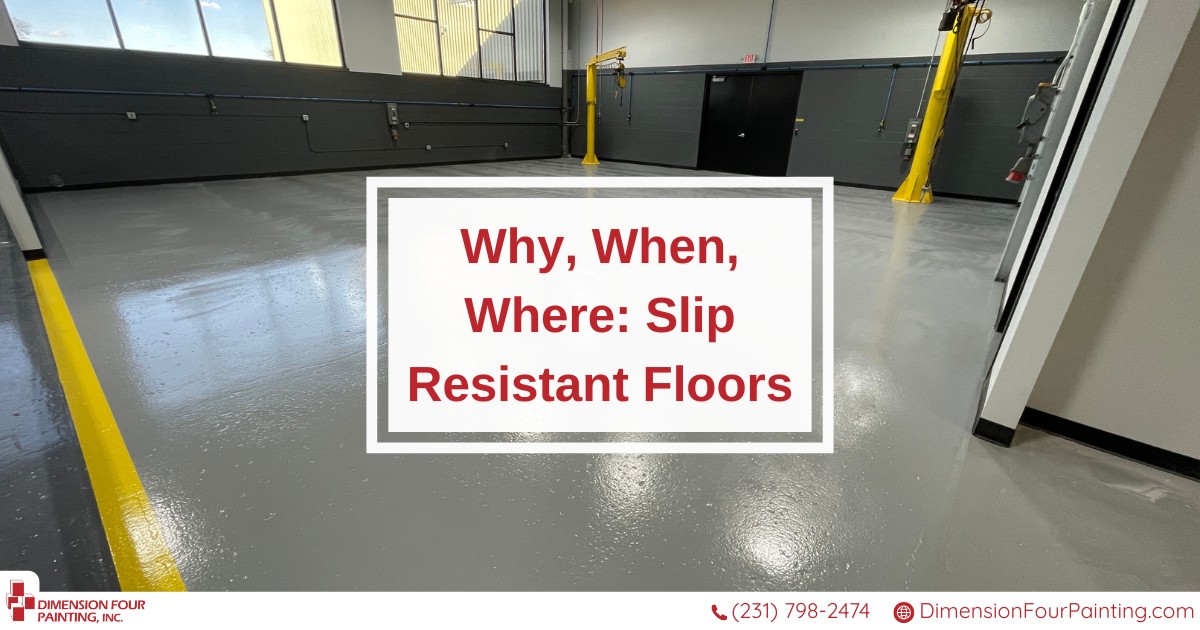
What Are Slip-Resistant Floor Coatings?
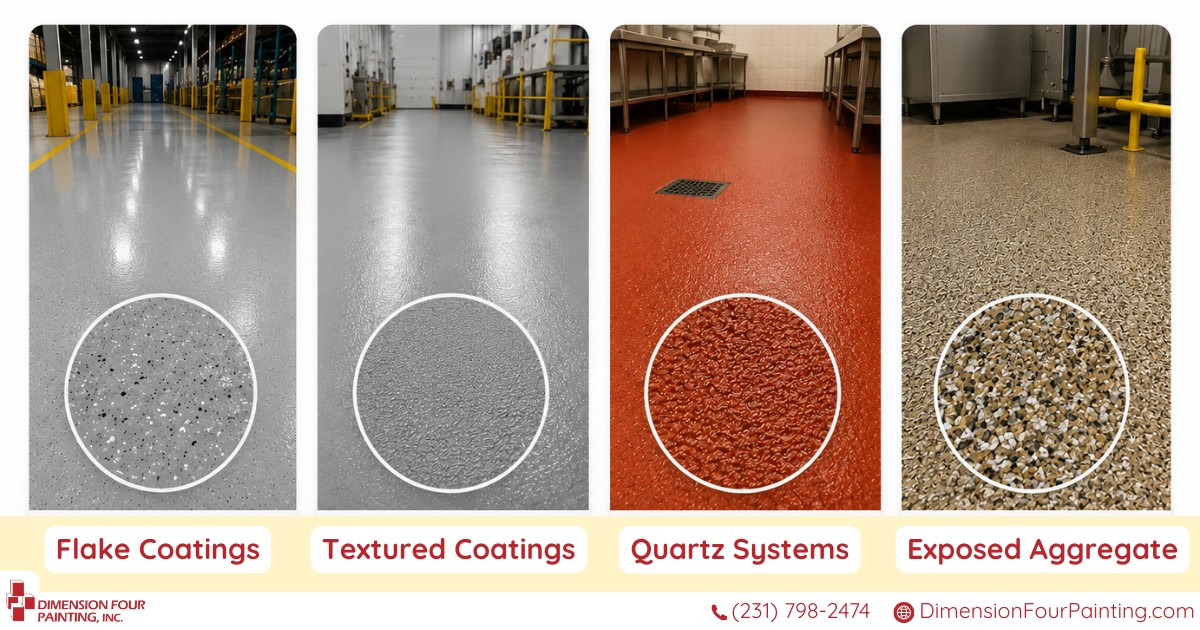
Slip-resistant floor coatings are protective floor systems designed to improve traction and reduce the likelihood of slips and falls. Unlike smooth floor paints or basic sealers, these coatings incorporate textured materials or aggregates that create grip underfoot.
The level of texture can vary depending on the environment. Some facilities require a subtle anti-slip finish for public walkways, while others need aggressive traction systems capable of handling water, oils, or industrial debris.
These coatings are commonly built into epoxy or urethane floor systems and are designed to withstand both traffic and cleaning without losing effectiveness over time.
Why Slip Resistance Matters in Commercial Facilities
Slip-and-fall hazards are not just operational concerns; they are also closely tied to workplace safety expectations. OSHA’s Walking-Working Surfaces standard (29 CFR 1910.22) requires employers to maintain floors and walking-working surfaces in a safe condition, free from hazards such as spills, moisture, and slippery conditions.
In environments where wet processes, oils, dust, or heavy traffic are common, slip resistant floor coatings help facilities support those safety efforts while reducing long-term risk.
Slips and falls remain one of the most common workplace and public safety incidents across commercial properties. Wet floors, polished concrete, dust buildup, and smooth coatings all increase the risk, especially in environments with constant movement or changing conditions.
Beyond the obvious safety concerns, accidents can lead to:
- Employee injuries and lost productivity
- Liability claims and insurance costs
- Damage to brand reputation
- Increased maintenance and cleanup concerns
A properly installed slip resistant floor coating helps reduce these risks while creating a safer, more controlled environment for everyone using the space.
Where Slip-Resistant Floor Coatings Matter Most
Not every area of a building requires the same level of floor protection. Some spaces experience far greater exposure to moisture, chemicals, or heavy traffic, making traction a much bigger concern.
| Facility Area | Why Slip Resistance Matters |
| Warehouse Floors | Forklift traffic, dust, and occasional spills create unpredictable footing conditions. |
| Manufacturing Facilities | Oils, chemicals, and production residue increase slip risk around machinery and workstations. |
| Commercial Kitchens | Water, grease, and constant cleaning make traction essential for employee safety. |
| Healthcare Facilities | Safe pedestrian movement is critical for staff, patients, and visitors. |
| Entrances and Walkways | Rain, snow, and tracked-in moisture create slippery transition zones. |
| Locker Rooms and Restrooms | Wet surfaces dramatically increase fall risk in public-use areas. |
| Loading Docks and Service Areas | Frequent movement of equipment and deliveries requires stable footing. |
In climates like West Michigan, slip resistance becomes even more important during colder months when snow, salt, and moisture are constantly brought indoors.
Slip Resistant Floor Coatings vs Standard Floor Paint
Many businesses assume standard floor paint provides enough protection, but smooth coatings can actually become slippery when wet or dirty.
Slip resistant systems differ because they are designed specifically for traction and durability. Rather than relying on appearance alone, they are engineered to perform under real working conditions.
Compared to standard coatings, slip resistant systems typically offer:
- Better traction under wet conditions
- Improved durability in high-traffic environments
- Greater resistance to wear and abrasion
- Longer-lasting performance with fewer touch-ups
This makes them especially valuable in industrial and operational settings where safety cannot depend on perfect conditions.
Balancing Safety and Cleanability
One common misconception is that slip-resistant coatings must feel rough or difficult to clean. In reality, the level of texture can be customized based on how the space is used.
For example, a manufacturing floor may require a more aggressive texture for traction around oils or chemicals, while a healthcare corridor may use a finer anti-slip finish that remains easy to sanitize and maintain.
The goal is not to create unnecessary roughness; it’s to achieve the right balance between traction, durability, and maintainability for the environment.
Proper Surface Preparation Matters
Like any industrial floor system, slip-resistant coatings perform best when the underlying concrete is prepared correctly. Surface preparation ensures the coating bonds properly and maintains its performance over time.
This process may include:
- Cleaning and degreasing the surface
- Repairing cracks or damaged areas
- Grinding or profiling the concrete
- Moisture testing where necessary
Without proper preparation, even high-quality floor systems can fail prematurely.
Long-Term Benefits of Slip Resistant Floor Coatings
When installed correctly, slip-resistant floor coatings provide benefits far beyond immediate safety improvements.
Businesses often see:
- Fewer slip-and-fall incidents
- Lower long-term maintenance costs
- Better floor durability under heavy use
- Cleaner, more professional-looking facilities
- Improved employee and visitor confidence
These systems also help facilities maintain compliance with internal safety standards while protecting the underlying concrete from wear and damage.
Why Professional Installation Matters
Installing slip resistant floor coatings requires more than simply adding texture to paint. The type of coating, aggregate, surface profile, and application method all affect how the floor performs long term.
Professional contractors evaluate traffic patterns, environmental exposure, cleaning requirements, and safety goals before recommending a system. This ensures the coating matches the actual conditions of the facility rather than applying a generic solution.
In industrial and commercial spaces, the right coating system can dramatically improve both safety and durability.
Safer Floors Start With the Right Coating System
Slip resistant floor coatings help businesses create safer, more durable environments without sacrificing appearance or performance. Whether you operate a warehouse, healthcare facility, commercial kitchen, or manufacturing plant, proper traction can make a major difference in daily operations and long-term risk reduction.
Choosing the right system, and installing it correctly, helps protect employees, customers, and your facility investment for years to come.
Ready to improve safety and durability in your facility?
📞 Call 231-798-2474 today or request your free, no-obligation floor coating estimate online. Let’s build a floor system designed to perform under real-world conditions.