In industrial painting, long-term performance doesn’t start with the paint; it starts with the surface. No matter how advanced the coating system is, it will only perform as well as the surface it’s applied to. That’s where surface profiling comes in.
Surface profiling is a critical step in preparation that directly affects how well a coating bonds, how long it lasts, and how it performs under real-world conditions. Without proper profiling, even high-quality coatings can fail prematurely.
If you’re planning an industrial painting project, understanding surface profiling helps you avoid one of the most common – and costly – mistakes in the process.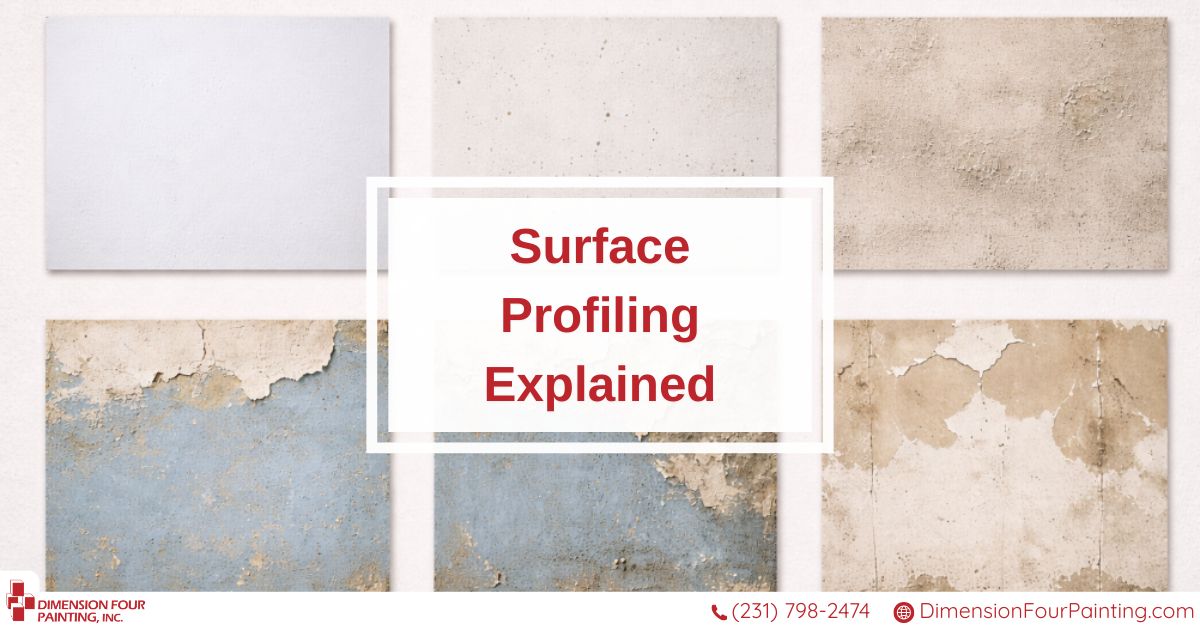
What Is Surface Profiling?
Surface profiling is the process of creating a controlled texture on a surface before applying a coating. Instead of leaving the surface smooth, contractors intentionally roughen it to form microscopic peaks and valleys.
This texture gives the coating something to grip onto. Rather than simply sitting on the surface, the coating mechanically bonds to it, which significantly improves adhesion.
In industrial environments, where coatings are exposed to heavy traffic, moisture, chemicals, and temperature changes, this bond is essential for long-term performance.
Why Surface Profiling Matters
At a basic level, surface profiling improves adhesion. But in practice, its impact goes much further.
Without proper profiling, coatings are more likely to:
- Peel or delaminate
- Wear down unevenly
- Fail under stress or impact
- Require earlier repainting
With proper profiling, coatings perform as intended. They stay bonded, resist wear, and maintain their protective properties over time.
In industrial facilities, where downtime and maintenance costs are high, this difference is significant.
How Surface Profiling Works
Surface profiling is not a one-size-fits-all process. The method and depth of the profile depend on the substrate and the coating system being applied.
For example, a thin coating requires a lighter profile, while a thicker system needs a deeper surface texture to anchor properly. If the profile is too shallow, adhesion suffers. If it’s too aggressive, the coating may not cover evenly.
This is why experienced contractors match the profile to the coating system rather than applying a generic approach.
Common Surface Profiling Methods
Different environments and surfaces require different techniques. The most common profiling methods include:
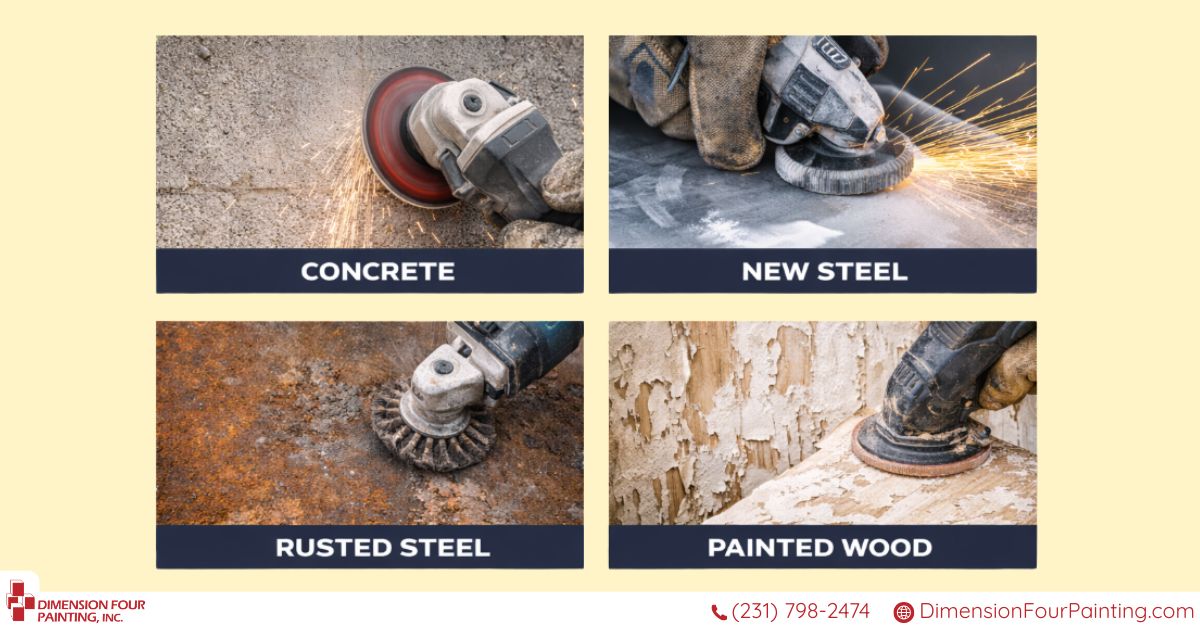
Grinding
Grinding uses rotating equipment to remove surface layers and create a consistent profile. It’s commonly used on concrete floors and walls where a controlled, even texture is needed.
Abrasive Blasting
Also known as sandblasting or shot blasting, this method propels abrasive material at high speed to clean and texture the surface. It’s often used for steel and heavy industrial applications.
Mechanical Abrasion
This includes tools like scarifiers or sanding equipment to roughen the surface. It’s typically used for smaller areas or targeted preparation.
Each method is selected based on the material, condition of the surface, and the requirements of the coating system.
Surface Profiling for Different Substrates
Not all surfaces behave the same, which is why profiling must be adjusted accordingly. Concrete surfaces often require profiling to open up pores and remove contaminants. Smooth or sealed concrete will not allow coatings to bond properly without this step.
Steel surfaces require both cleaning and profiling to remove rust, mill scale, and existing coatings while creating a surface the new coating can adhere to.
Previously painted surfaces may need selective profiling, depending on whether the existing coating is stable or failing. Matching the method to the material is key to achieving consistent results.
What Happens Without Proper Surface Profiling
Skipping or rushing surface profiling is one of the most common causes of coating failure in industrial environments.
When profiling is not done correctly:
- Coatings may peel shortly after application
- Moisture can get beneath the surface
- Wear and damage appear much faster
- Maintenance costs increase significantly
These issues are often not immediately visible, which makes them more costly. By the time failure becomes obvious, repairs usually require full rework of the surface.
Surface Profiling and Long-Term Value
Surface profiling may not be the most visible part of a painting project, but it has one of the biggest impacts on long-term results.
Proper profiling:
- Extends coating lifespan
- Improves resistance to wear and impact
- Reduces maintenance and repaint cycles
- Ensures consistent, professional results
In industrial settings, this translates directly into cost savings and reduced downtime.
Why Professional Preparation Matters
Surface profiling requires the right equipment, technique, and understanding of coating systems. It’s not a step that should be improvised or skipped.
Professional contractors evaluate the surface, select the appropriate method, and ensure the profile matches the coating requirements. This level of precision is what separates a coating that lasts from one that fails early.
In industrial painting, preparation is not just part of the process – it is the process.
The Foundation of a Durable Coating
Surface profiling is one of the most important steps in industrial painting, even though it often goes unnoticed. It determines how well a coating bonds, how long it lasts, and how it performs under real conditions.
If you want coatings that hold up over time, surface preparation, including proper profiling, must be done correctly from the start.
Ready to get your project done right from the surface up?
📞 Call 231-798-2474 today or request your free, no-obligation estimate online.
Let’s build a coating system that lasts.