Warehouses are built for movement. Forklifts, pallet jacks, inventory systems, employees, and deliveries all operate in fast-moving environments where durability and visibility matter every day. In spaces like these, paint is not just cosmetic; it’s functional infrastructure that supports safety, organization, and long-term facility performance.
That’s why warehouse painting requires a different approach than standard commercial painting. The coatings used inside a warehouse must withstand constant wear, resist damage, and help maintain a clean, navigable environment under demanding conditions.
Whether you manage a distribution center, manufacturing warehouse, logistics hub, or storage facility in Muskegon or the surrounding areas, choosing the right painting system can significantly improve how your building performs over time.
Why Warehouse Painting Is Different
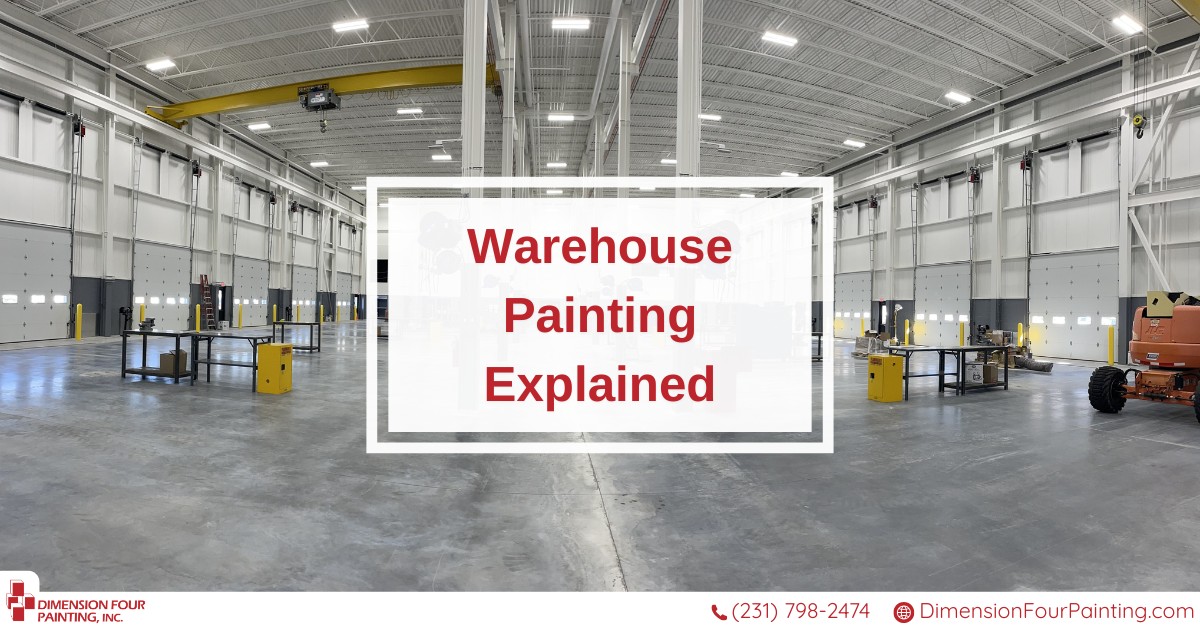
Warehouse environments place far more stress on painted surfaces than traditional office or retail spaces. Walls, floors, columns, and loading areas experience repeated contact from equipment, impacts from inventory movement, dust buildup, and fluctuating temperatures.
Standard paint systems often struggle under these conditions. Without proper coatings and preparation, painted surfaces can quickly begin to:
- Scuff and chip
- Peel under impact or abrasion
- Fade from heavy use or lighting exposure
- Collect stains and grime that become difficult to clean
Warehouse painting systems are designed specifically to handle these challenges. The goal is not just appearance; it’s creating a surface that remains durable, visible, and easy to maintain under continuous use.
Durability Starts With the Right Coating System
In warehouse environments, durability is one of the biggest priorities. High-traffic areas must withstand constant movement without breaking down prematurely.
Different areas of a warehouse often require different coating systems depending on the exposure conditions. For example, loading docks may need impact-resistant coatings, while interior walls near workstations may prioritize washability and stain resistance.
| Warehouse Area | Primary Coating Consideration |
| Loading docks | Impact and abrasion resistance |
| Warehouse floors | Heavy traffic and chemical resistance |
| Walls and columns | Scuff resistance and visibility |
| Storage areas | Durability and cleanability |
| Exterior surfaces | Weather and moisture protection |
Choosing the right system helps reduce repaint frequency and keeps maintenance costs more predictable over time.
Visibility and Workplace Organization
Visibility plays a major role in warehouse efficiency and safety. Clear markings, bright surfaces, and intentional color contrast help employees and operators move through the space more confidently.
Warehouse painting often supports visibility through:
- Bright wall finishes that improve lighting reflection
- Clearly painted safety zones and walkways
- High-visibility columns or hazard markings
- Defined traffic flow areas for equipment and pedestrians
In large industrial spaces, visual clarity reduces confusion and improves operational flow. Employees can identify pathways, storage zones, and hazards faster, especially in facilities operating around the clock.
This becomes even more important in older warehouses where lighting conditions may already be limited.
How Warehouse Painting Supports Safety
Safety is one of the most important functions of warehouse painting. Proper coatings and markings help reduce accidents by improving visibility and organizing movement throughout the facility. In busy industrial spaces where forklifts, pallet jacks, employees, and deliveries constantly move through shared areas, visual clarity becomes critical to maintaining safe operations.
OSHA’s Walking-Working Surfaces standard (29 CFR 1910.22) requires employers to maintain floors and walking-working surfaces in safe condition, free from hazards such as spills and slippery conditions.
Painted pedestrian walkways help separate employees from forklift traffic, while high-visibility markings draw attention to loading zones, clearance areas, and restricted spaces. Slip resistant floor coatings are also commonly used in warehouses where moisture, dust, or spills create traction concerns.
When paint systems are maintained properly, they become part of the facility’s broader safety strategy rather than just decoration. Clear markings, durable coatings, and visible traffic organization help facilities reduce confusion, improve movement throughout the warehouse, and create a safer environment overall.
Surface Preparation Matters in Industrial Spaces
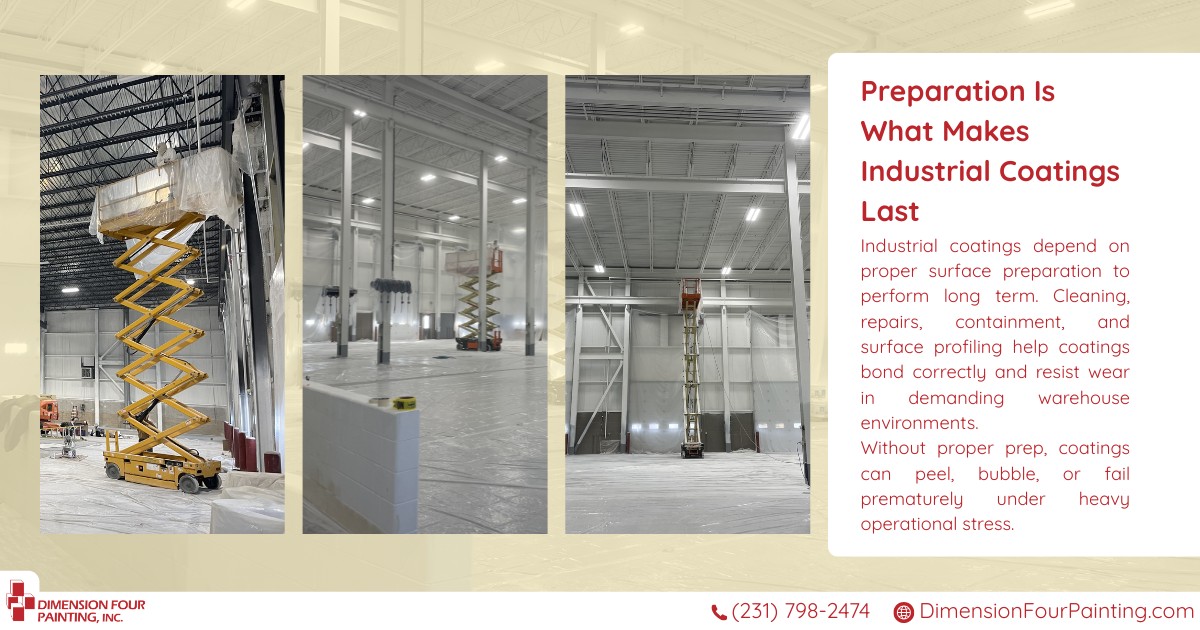
Warehouse coatings experience constant stress, which means preparation is critical before any painting begins. Without proper surface preparation, even high-performance coatings can fail prematurely.
Preparation may include:
- Cleaning and degreasing surfaces
- Repairing cracks or damaged areas
- Grinding or profiling concrete
- Removing failing coatings or contaminants
Concrete floors, in particular, require proper profiling so coatings can bond correctly. Skipping this step often leads to peeling, bubbling, or uneven wear shortly after installation.
In industrial painting, preparation is what determines whether a coating lasts years, or fails within months.
Minimizing Downtime During Warehouse Painting
One of the biggest concerns with warehouse painting projects is disruption to operations. Warehouses depend on movement and access, which means contractors must plan carefully around schedules, equipment flow, and production demands.
Professional warehouse painting contractors often minimize disruption by:
- Working in phases
- Scheduling after-hours or weekend work
- Coordinating around active production areas
- Using fast-dry coatings where appropriate
This approach allows facilities to continue operating while improvements are made in controlled sections of the building.
For warehouses with continuous operations, proper planning is just as important as the coating itself.
Maintaining Warehouse Paint Systems Over Time
Warehouse paint systems require ongoing maintenance to stay effective. High-traffic areas naturally wear faster, especially around loading zones, equipment paths, and entrances.
Routine inspections help identify:
- Worn safety markings
- Impact damage on walls and columns
- Fading visibility lines
- Areas where coatings are losing adhesion
Addressing these issues early helps extend coating life and prevents larger repair projects later.
A proactive maintenance approach also keeps the facility looking organized and professional for employees, vendors, and visitors.
Why Local Experience Matters in Muskegon Warehouses
Warehouses in West Michigan face environmental conditions that affect how coatings perform over time. Temperature fluctuations, moisture exposure, tracked-in snow and salt, and seasonal humidity all influence coating durability and maintenance needs.
A contractor familiar with warehouse painting in Muskegon understands how these local conditions impact product selection, preparation requirements, and scheduling.
This experience helps ensure coatings are chosen for real operating conditions and not just ideal ones.

Warehouse Painting That Performs Under Pressure
Warehouse painting is about far more than appearance. The right coating systems improve durability, strengthen safety, support visibility, and help facilities operate more efficiently under demanding conditions.
When surfaces are properly prepared and coatings are selected based on real operational needs, warehouses stay cleaner, safer, and easier to maintain over the long term.
If your warehouse is showing signs of wear, fading safety markings, or coating failure, it may be time to evaluate your paint systems before small issues become larger operational problems.
Ready to improve durability, safety, and visibility in your warehouse?
📞 Call 231-798-2474 today or request your free, no-obligation warehouse painting estimate online. Let’s build a warehouse painting system designed for real industrial performance.